Low-Slope Roofs Built to Handle Water
Flat Membrane Roofing in Flushing for commercial buildings and low-slope residential structures that need lasting waterproof protection
Cardinal Roofing Corp. installs flat membrane roofing systems across Genesee County and the surrounding areas using TPO, EPDM, and PVC materials designed for commercial and low-slope residential applications. You need this service when traditional pitched roofing isn't practical for your building design or when you're replacing a failing flat roof that pools water or leaks during heavy rain. Each membrane type offers different performance characteristics suited to specific building needs and weather exposure patterns common to Michigan.
The installation process addresses the primary challenge flat roofs face: water removal without gravity-assisted drainage. Proper slope engineering, seam welding for TPO and PVC systems, and adhesive application for EPDM prevent the pooling that leads to premature material breakdown and interior water damage. Membrane selection depends on your building's use, roof traffic patterns, and whether energy efficiency through reflective surfaces matters for your operating costs.
Request an on-site inspection to determine which membrane system matches your building's structural requirements and budget.
How Membrane Systems Stop Leaks Long-Term
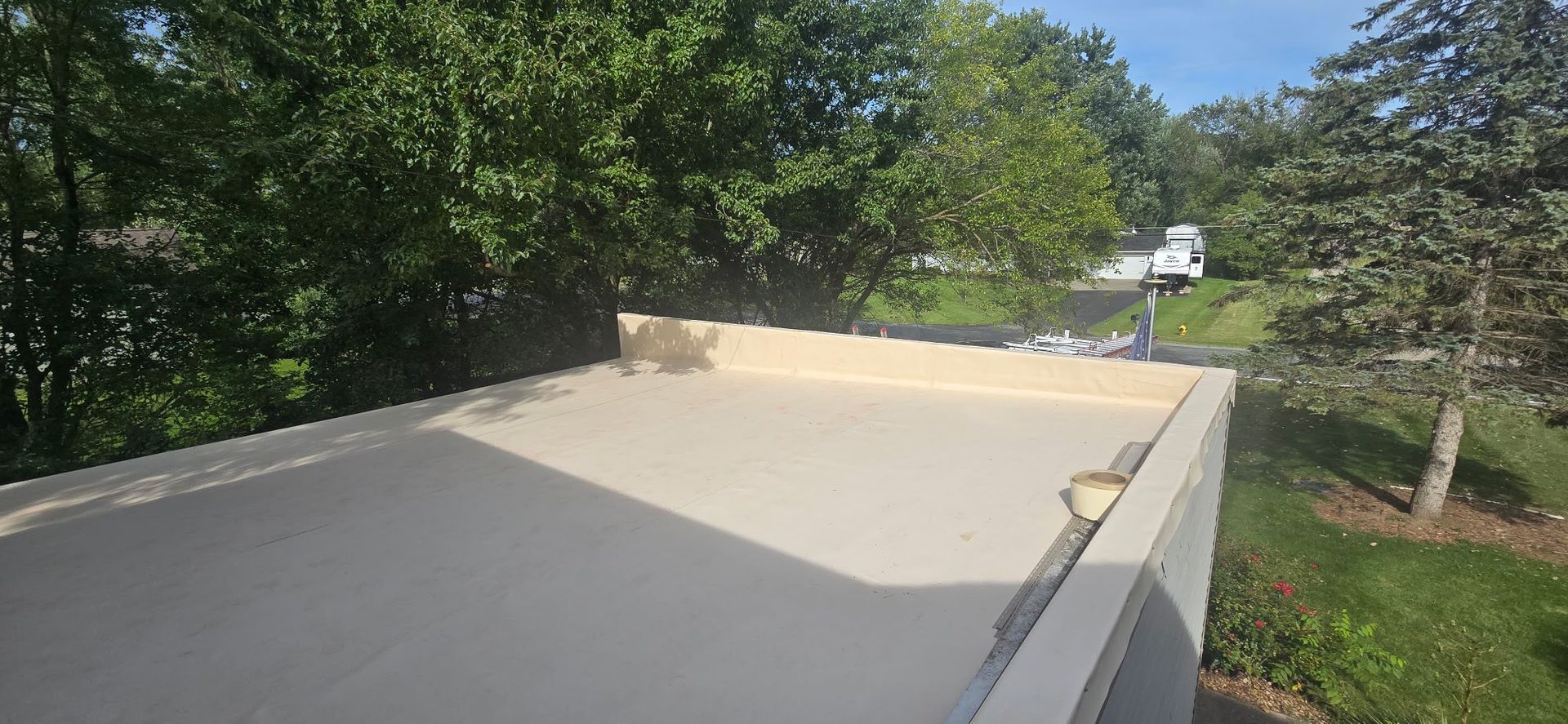
Flat membrane roofing works by creating a continuous waterproof barrier across the entire roof surface, with seams either heat-welded or chemically bonded depending on the material. TPO and PVC systems use hot-air welding to fuse seams into a single watertight sheet, while EPDM relies on tape or liquid adhesives that bond rubber sections together. The membrane extends up parapets and around penetrations like vents and HVAC units, forming a sealed envelope that directs water toward drains and scuppers even when the roof appears perfectly flat.
After installation by Cardinal Roofing Corp., you'll notice that water moves off the roof within hours instead of sitting in puddles for days, and interior ceiling stains stop appearing after storms. The roof surface remains intact without the cracking and blistering that happens with aged tar-based systems, and you won't see seam separation or bubbling that signals trapped moisture. White or light-colored TPO and PVC membranes reduce cooling costs during summer months by reflecting heat rather than absorbing it into the building.
Low maintenance requirements mean you'll perform visual inspections and debris removal rather than ongoing patching and coating work. These systems resist UV breakdown better than older built-up roofing, and puncture-resistant formulations hold up to occasional roof traffic for equipment servicing. Warranties typically cover material performance for fifteen to thirty years depending on the membrane grade and installation method used.
Questions Before Starting Your Project
Property owners in Flushing and Genesee County often ask about membrane differences, installation timing, and what makes flat roofing systems fail or succeed over time.
What's the difference between TPO, EPDM, and PVC membranes?
TPO offers heat-reflective properties at moderate cost, EPDM provides rubber flexibility and lower upfront pricing, and PVC delivers superior chemical resistance for buildings near industrial exhaust or rooftop equipment that vents oils or solvents.
How does Michigan weather affect membrane choice?
Freeze-thaw cycles and snow load matter more than total precipitation, so membranes need flexibility when cold and tear resistance under ice dam conditions that develop along roof edges during winter.
What causes flat roofs to pool water even after installation?
Inadequate slope design, structural settling over time, or insulation compression beneath the membrane can create low spots where water collects instead of draining within forty-eight hours as building codes require.
How long does installation take for a typical commercial building?
Roof size, existing conditions, and weather windows determine the timeline, but most commercial projects involve coordinating work around business operations to avoid interior disruption from open roof sections.
Cardinal Roofing Corp. evaluates your existing roof structure and drainage to recommend the membrane system that matches your building's demands. Schedule a system evaluation to determine material options and installation requirements specific to your property.