Ventilation Failures That Cause Hidden Roof Damage
Roof Ventilation Repair in Genesee County for homes with heat buildup, ice dam formation, or premature shingle deterioration linked to airflow problems
Heat and moisture trapped in an attic space do not stay there—they work their way into roofing materials, deck boards, and insulation until visible damage appears. Cardinal Roofing Corp addresses roof ventilation problems across Genesee County, restoring balanced airflow to systems where intake and exhaust points have failed, become blocked, or were never installed correctly in the first place. Homeowners who notice shingles curling well before their expected lifespan, persistent ice dams along the eave line, or elevated attic temperatures in summer are often dealing with a ventilation deficiency rather than a surface material problem.
Michigan winters make attic ventilation a structural concern, not just an efficiency detail. When warm air accumulates near the ridge while soffits remain blocked, the underside of the deck experiences repeated moisture cycling—condensation forms, wood swells, and over multiple seasons the structural integrity of the deck deteriorates. Simultaneously, heat escaping unevenly through the roof surface causes snow to melt and refreeze at the cold overhang, building ice dams that force water behind the shingles. Identifying which component of the system has failed—ridge vent blockage, baffled soffit obstruction, powered exhaust failure, or insufficient net free area for the attic square footage—is the diagnostic step that determines what repair actually addresses the problem.
Arrange an attic and ventilation assessment to identify specific airflow deficiencies affecting your roof system..
Why Airflow Balance Determines How Long a Roof Lasts
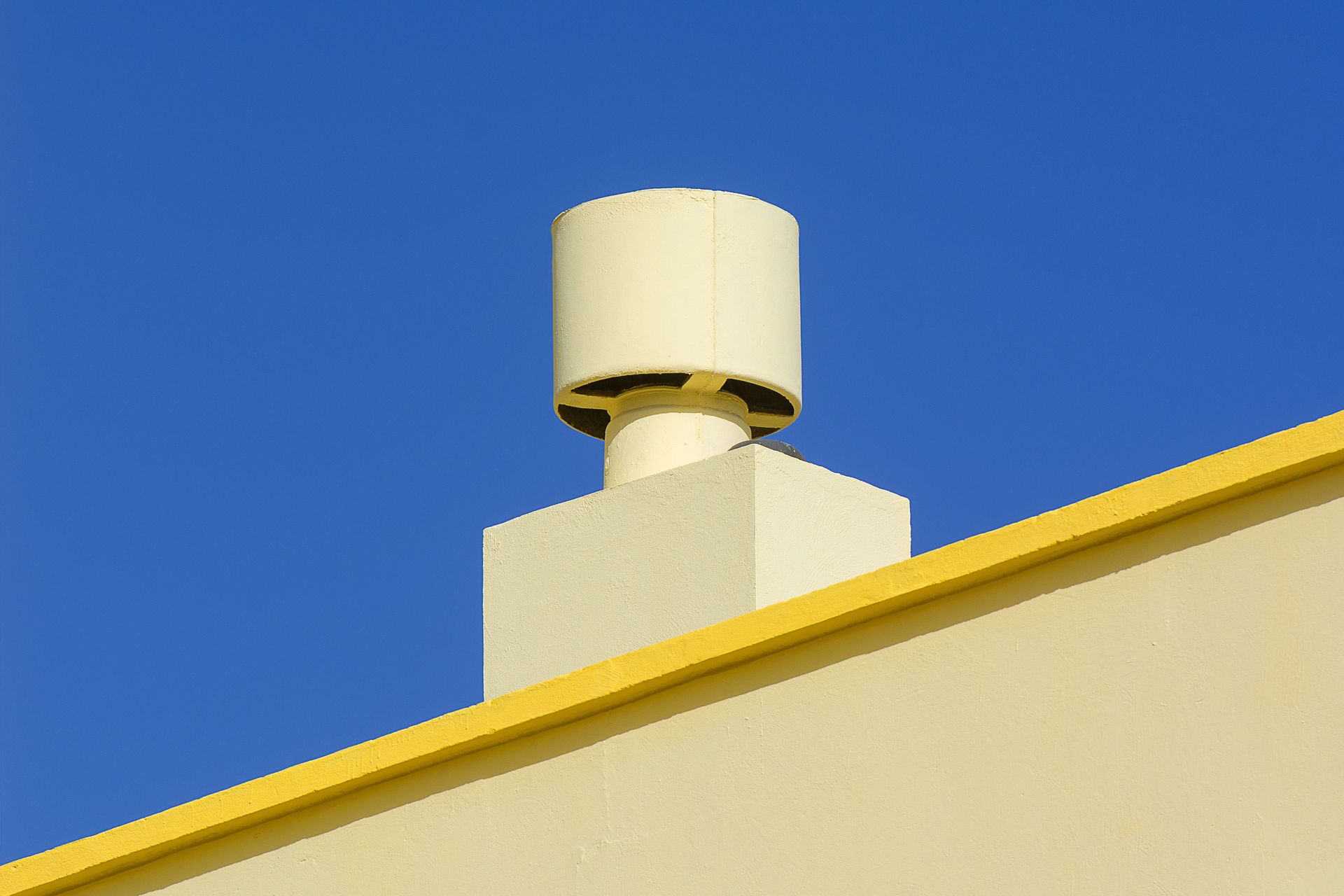
A functioning ventilation system operates on a straightforward mechanical principle: cooler outside air enters through low intake points at the soffit, travels upward through the attic space, and exits through high exhaust points at or near the ridge. When that path is interrupted—by insulation pushed against the soffit, a ridge vent choked with debris, or an undersized exhaust capacity relative to attic volume—the air movement stops and the space begins to accumulate heat and humidity. Repair work focuses on restoring that path: clearing or replacing intake baffles, opening blocked soffit venting, repairing or replacing failed ridge vent sections, and in some cases adding exhaust capacity where the original system was undersized.
After ventilation is restored, the changes that appear over time are measurable: attic temperatures drop, deck moisture levels normalize, and the shingle warranty conditions that require adequate ventilation are met. More immediately, you will notice the eave line behaving differently in winter—with balanced airflow preventing the uneven heat distribution that produces ice dams. Cardinal Roofing Corp evaluates both the symptoms and the underlying airflow math to confirm that any repair actually resolves the system deficiency rather than treating one vent component in isolation.
Ventilation repair sometimes intersects with insulation correction—particularly when blown insulation has migrated to cover soffit intake areas. That condition cannot be resolved by addressing the vent hardware alone; the insulation installation must also be corrected and baffles installed to maintain a clear channel from soffit to attic space. Understanding where one trade's work ends and another begins is part of diagnosing a ventilation problem accurately.
Answers to Frequent Ventilation Repair Questions
Ventilation is one of the least-understood components of a roofing system, and the questions below reflect what Genesee County homeowners most commonly ask before scheduling repair work.
How do I know if my roof ventilation is the cause of my ice dam problem?
Ice dams that form consistently along the full eave line—rather than at isolated points—typically indicate uneven heat distribution in the attic caused by insufficient exhaust or blocked intake, which is a ventilation problem rather than an insulation-only issue.
What does a ventilation repair typically involve?
Depending on the diagnosis, repair may include clearing blocked soffit vents, installing intake baffles to prevent insulation interference, replacing damaged ridge vent sections, or adding exhaust capacity to bring the system's net free area in line with attic square footage.
Why do shingles curl or blister when ventilation is poor?
Excessive attic heat transfers through the deck into the shingles, accelerating the drying and stiffening of the asphalt layer—this is why curling or blistering appears on roofs that are not yet near the end of their rated service life.
How does Genesee County's climate specifically affect ventilation requirements?
The combination of cold winters and warm, humid summers means attic systems cycle between moisture condensation risk and heat accumulation stress, making balanced airflow more critical here than in climates with less seasonal temperature variation.
What is the difference between ridge vents and powered exhaust fans, and when is each appropriate?
Ridge vents rely on passive convection and work well when adequate soffit intake is present; powered fans are sometimes used where roof geometry limits passive airflow, but they can actually depressurize the attic and draw conditioned air from living spaces if not sized and installed correctly.
Ventilation problems compound over time—each season of inadequate airflow adds stress to deck material and roofing components—so contact Cardinal Roofing Corp to schedule an evaluation and get a clear picture of what your system currently requires.